

Blog
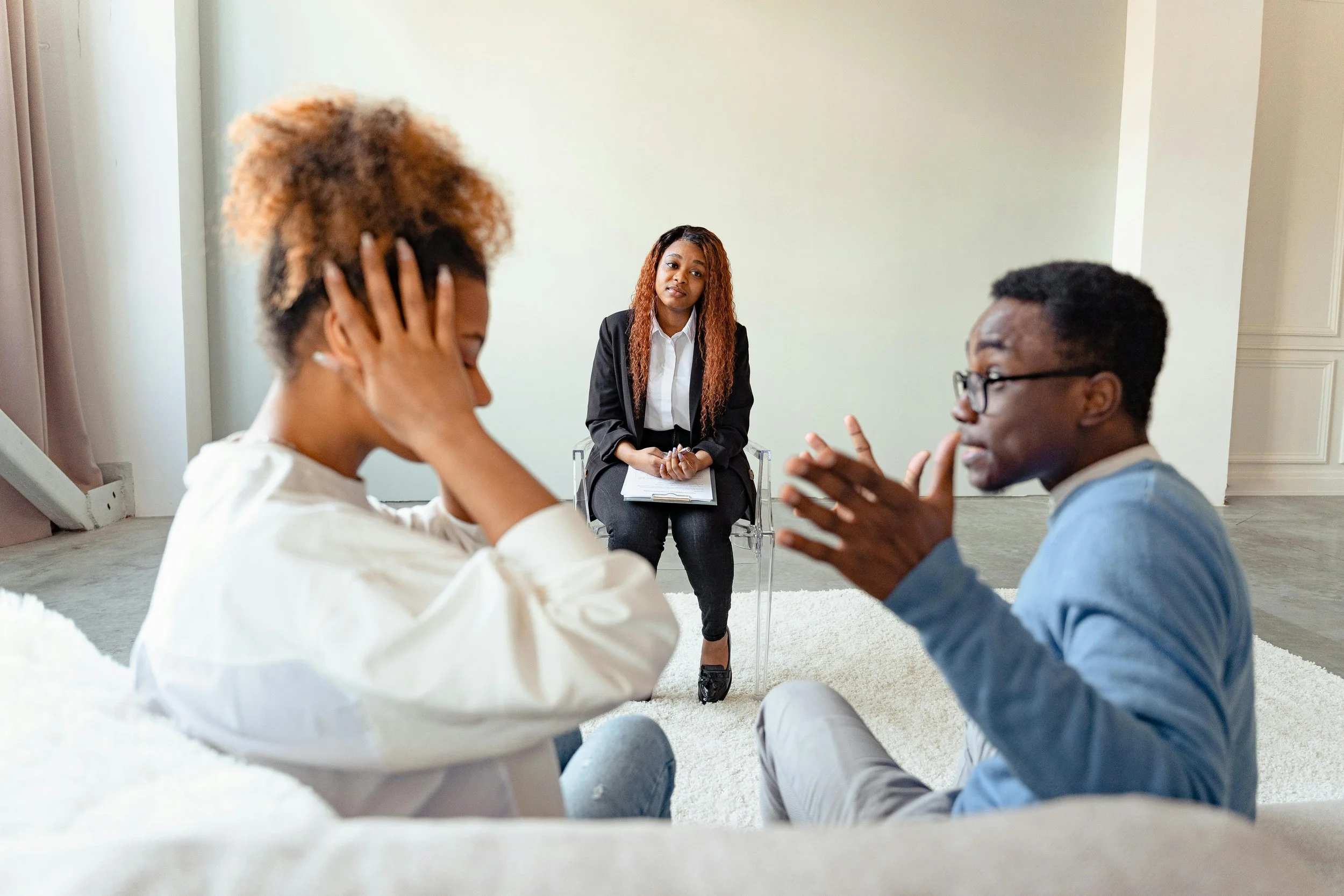
Everything You Need to Know About Couples Therapy
The couple therapists help romantic partners improve communication, resolve conflicts, and strengthen their relationship by providing a neutral space to address issues like disconnection, infidelity, or stress. It teaches skills for healthier interactions, understanding each other's perspectives, and finding constructive solutions, applicable to any stage or marital status, whether for major crises or preventative "tune-ups".
What is couples therapy?
There are some similarities between couples therapy and traditional talk therapy, such as the ultimate goals being to relieve people’s distress and improve their functioning in an important aspect of life. But unlike other traditional forms of therapy, there are typically three parties in the room in addition to the therapist. There is each of the partners in the couple, and there is the relationship itself. In a very dynamic high-wire act, the couple's therapist neutrally balances the needs and interests of all three. Meaning the therapist’s “client” in this case is the relationship, not a person. This means that the therapist doesn’t take “sides” between partners but has a neutral stance in session and offers guidance in ways that are best for the relationship, not a particular partner. This requires the couples therapist to balance many dynamics and observe not only what is being said but the patterns that are being expressed.
Couple therapist help romantic partners improve communication, resolve conflicts, and strengthen their relationship by providing a neutral, safe space to address issues like disconnection, infidelity, or stress. Couples therapy teaches skills for healthier interactions, understanding each other's perspectives, and finding constructive solutions, applicable to any stage or marital status, whether for major crises or preventative "tune-ups".
What can you work on in couples therapy?
There are many issues, problems, or concerns that can be addressed in couples therapy. The list can go on and on and can be as unique as every couple. But here are some common issues and struggles that many couples come to therapy for.
Communication breakdowns where couples struggle feeling understood and connected with each other. It is very easy to get into unhealthy and problematic communication patterns. Couples therapy can help couples learn new skills and how to talk and listen more effectively. Communication is a complex pattern and many couples get stuck in unhealthy ones. It is not uncommon to need a 3rd party to help break the unhealthy patterns.
Recurring conflicts where couples struggle with having the “same” argument over and over. It is not uncommon for couples to have conflict patterns that are repetitive and problematic. Couples therapy can help couples understand their conflict patterns, break them, and create new, healthier ways of disagreeing. Oftentimes, partners get stuck on being right instead of understanding each other’s perspective and working together. Couples therapy can help break these patterns.
Infidelity is another common reason that couples come to therapy. When one person cheats, the other generally feels betrayed and hurt. But an affair doesn't have to mean the end of a relationship, provided both people want to improve the situation. Couples therapy can help heal the relationship and rebuild the broken trust after an affair. It’s hard work for the partners and doesn’t heal overnight, but is possible.
Intimacy issues are another thing that can be worked on couples therapy. Working on either or emotional or physical intimacy. These issues can impact the quality of the relationship as a whole and can sometimes be difficult to talk about. We sometimes struggle with shame or struggle finding the right words. Having a trained professional help remove judgement and guide healing conversations. Sometimes having a therapist guide the conversation, partners learn driving forces behind the issues.
External stressors, such as financial problems, parenting, or health issues can be addressed in couples therapy. Money can be a source of stress and conflict for many couples. One partner might want to save while the other partner likes to spend or they might not have the same financial goals. Our views and beliefs can go back to childhood and how our parents taught us about money. Relationship counseling can help couples gain understanding of the other’s perspective and come to a compromise. Disagreeing on parenting issues can cause issues within a relationship as well. Couples therapy can help couples communicate their perspective clearly and understand their partner's perspective as well. When a partner gets a diagnosis of a physical or mental health condition, it can strain an otherwise healthy relationship. One person might take on the responsibility of caring for their sick partner. Meanwhile, the partner with the illness might feel like they've become a burden. The sick person could be an outside-related person, such as parent, and the added stress could impact the relationship. Couples counseling can help couples who are dealing with ill health find a path forward. Outside stress can impact the relationship negatively and finding ways to come together through the stressful event/situation might just need a therapist’s help.
When couples decide to start a family, it can add stress to the relationship. Deciding to have a child with another person is a milestone that brings many other choices. If infertility is an issue, you might need to decide how you'll have the child, such as whether you'll go through IVF, work with a surrogate or adopt. You'll also have to agree on how to raise the child. Couples counseling can help guide these conversations, so they happen effectively and with empathy. Adding another person to a family can be a joyous time, but also comes with some stress that sometimes help is needed to navigate and there is no shame in that.
Feeling disconnected from your partners. Couples therapy can help re-establish emotional closeness. It can help couples who wish to strengthen their bond and reconnect. You don't need to be struggling to benefit from couples therapy. Sometimes every day stress takes priority over the relationship, and you just want to feel renewed in your relationship. It can be helpful to work on some communication skills in order to nip small, minor issues in the bud before they become issues that cannot be overcome. There doesn’t need to be a big event or stressor in order to couples therapy to be beneficial.
Can you work on more than one issue in couples therapy? Of course! You can work on more than one struggle or issue. You and your partner can work with your therapist to come up with a treatment plan that aligns with your personal and relational goals.
Benefits of Couples Therapy
Restoring affection is a benefit and outcome of couples therapy. Feeling more affection towards your partner and receiving more affection from your partner when there has been a decrease in affection is a benefit. When you work through your struggles, you feel more connected to your partner, and you can learn ways to show each other affection. Even if your goal wasn’t to increase connection and affection, it can be a positive outcome when you work through other issues.
Building respect is a wonderful benefit of couples therapy. Couples therapy teaches you how to communicate respect for each other. Everyone wants a relationship where they feel respected by their partner.
Increasing intimacy is another benefit. Whether you are working specifically on intimacy or another issue, increased intimacy can be an indirect outcome. You can feel build more emotional intimacy with your partner when other struggles have faded. Many people need emotional intimacy to enjoy or desire physical intimacy.
Rebuilding trust after a trust breaking incident such as infidelity is a benefit of couples therapy. It can be helpful to have a professional help a couple navigate the intense emotions of a trust breaking incident and couples therapy can help restore trust. Trust in a relationship is needed in order to have a fulfilling relationship. Without it, you are left in a relationship where there is doubt and disappointment.
Helps you work through life's challenges: Even the happiest couples will face challenges in life, such as infertility, mental health concerns, traumatic events, and financial issues. A therapist can guide you through these obstacles, helping you develop the skills to work past them. Gaining skills to work through life’s challenges is a major benefit of therapy and being able to work through life’s challenges with a partner is an amazing strength as a couple.
Creates a safe space: Every time you and your partner attend a couples therapy session, you enter a safe haven. You know that everything you share with the counselor will be held in confidence. You also can rest assured that the therapist will remain neutral during the session and won't side with one partner or the other. Both people will have a chance to express themselves during the session. This can then hopefully translate into how you feel with your partner and your relationship.
Builds understanding and empathy in your relationship: Going to couples therapy can help you understand your partner better. Over several counseling sessions, you might gain a new perspective on their world. Likewise, your partner can develop a better understanding of your thoughts and experiences. Sometimes the best thing in a conversation or disagreement a couple can learn to gain is understanding of their partner. This builds communication skills, empathy, less escalation, and builds trust in a relationship.
Helps you resolve conflicts: Conflict is part of life. Knowing how to work through and solve disagreements is another secret to a sustainable and fulfilling relationship. Resentment can build when you and your partner struggle to move past issues or if you decide to sweep concerns under the rug. Your therapist can help you develop conflict resolution skills you can use during your sessions and later in life. These skills are things you and your partner can carry with you and can benefit your relationship long term.
Improves communication skills: Communication is essential to a healthy relationship, but not everyone knows how to express their thoughts and feelings appropriately. Working with a therapist, you and your partner can learn how to share your concerns and emotions effectively. Some of the skills include learning how to communicate effectively, active listening skills, and how to disagree healthily. Healthy communication is a skill, one that needs to be taught, practiced, and fine tuned.
There could be many other benefits, but these are just some of the most common benefits.
What is a couples counseling session like?
Most couples therapy is conducted conjointly, meaning with both partners present in sessions. Seeing or contacting one member of the couple separately is occasionally warranted but mostly done to gain information important to the relationship and with the permission of the other. The therapist is likely to ask many questions, including some about each partner’s family of origin and some that challenge an individual’s beliefs or perspective. The therapist is there to understand each partner as an individual and their role in the relationship. They also ask questions to challenge the couples’ way of thinking to push for change.
Couples' therapists do not take sides in disputes, but they may call out individual behaviors that contribute to joint problems. This is called neutral facilitation. The therapist will guide discussion and ensure that both partners feel heard and understood. Relational science has firmly established that both partners play a role in most couple problems.
The content of the session might vary but could include skill building, such as where the partners learn strategies like fair fighting rules, “I” statements, emotion regulation, and empathy; identifying patterns, such as uncovering deeper issues and dysfunctional interaction patterns that fuel conflict; or uncovering values and beliefs that impact behaviors and emotions. The session content will vary depending on the needs of the couple and the style of the therapist.
Types of Couples Therapy
The Gottman Method: It was developed by psychologists John Gottman and his wife Julie Gottman, and is therapy emphasizes the outsize power of negative emotion to harm a relationship, the importance of frequent bids for connection or response, the vital need for repairing the damage done by missing those bids, and the value of sharing their inner worlds. Partners learn how to express affection and respect as a means of building closeness and make “love maps'' reflecting their partner’s psychological world. Learn more here.
Emotion-Focused Therapy regards the restoration of a distressed couple’s physical and emotional bond as the best lever for change in the relationship. Drawing on attachment theory, the therapist encourages partners to access and express what lies under their anger or alienation. That disclosure of vulnerability becomes a powerful means for stirring the responsiveness of a partner. With contact restored, couples have a renewable source of mutual comfort, allowing them to jointly solve whatever problems they face. Learn more here.
Imago Relationship Therapy has as its theme “getting the love you want.” Its goal is to enable partners to fulfill the ideal of love they developed early in life through attachment to caregivers. Partners take turns listening and speaking; repeating or mirroring what the other says to demonstrate understanding; validating their partner’s perspective; and tapping into their feelings. Learn more here.
There are other methods or types of couples therapy, those are just a few popular and many couples therapists use a blend of multiple theories.
Can Couples Therapy Help Me?
If you wondering if couples therapy is right for you and your partner, I’d recommend reaching out to some therapists to see if they are a good fit and if they can have experience working with the struggles you are facing in your relationship. Many therapists offer free consultations and utilizing them will provide you some insight into their style, expertise, and provide you with the ability to ask any questions you might have about your specific issue(s). If you are interested in working with me, you can book a free consultation here.
With any therapy or issue, you and your partner have to been willing to be open, honest, and put in the effort to make the changes in your relationship. A therapist is only catalyst for change, they can not do the work for you.
Some takeaways are that couples therapy; it’s not just for crises but can be used to maintain or build on a healthy relationship, not just fix a broken one. It requires commitment as best results come when both partners are invested in making changes.
*This is for educational purposes only and not meant to replace treatment. Please consult your practitioner for treatment planning.